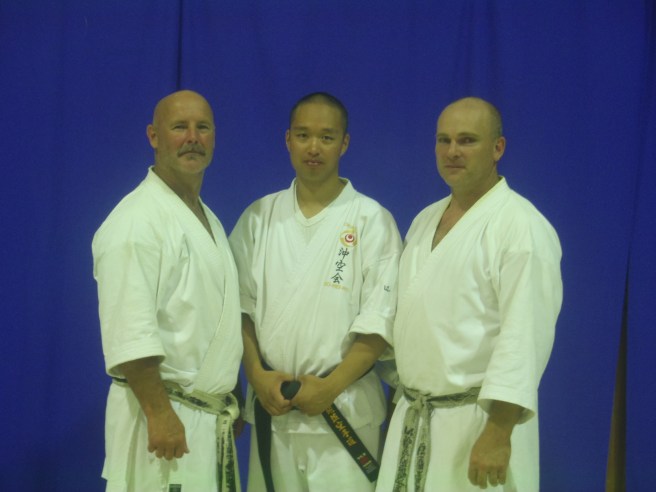
 The Gasshuku Karate camp is known for their very hard-working approach to traditional Karate training. The lead instructor is Sensei Ron Fagan and along with his Senpai Budrow, both are senior ranked in Chito-Ryu Karate. Sensei Fagan is a technician and innovator in karate instruction and practices.
After years of hearing how great the training is at Sensei Ron Fagan’s Karate camps, I had to experience this for myself. From a special invitation from a friend, Sensei Charles Quimby invited me to travel with him and his students to the camp this year.
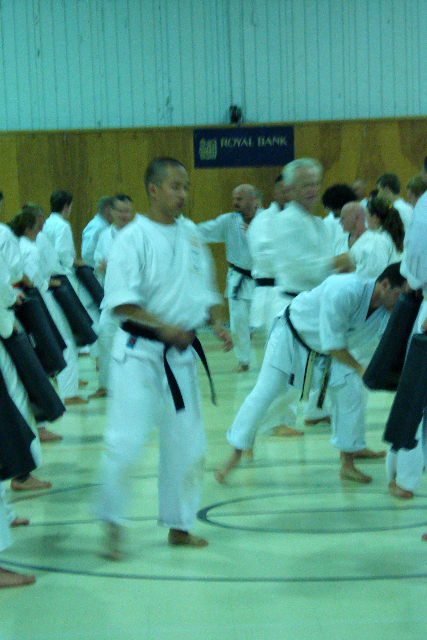
The three day camp was full of scheduled activities to keep all the participants busy. It was evident that the organizers came up with a thorough plan and I had to say they executed it very well. The camp consisted of scheduled training sessions with appropriate breaks.
The start of every training session consisted of warm up exercises that involved medicine balls, with the incorporation of calisthenics. Then the sessions lead into specific focuses, that worked kicks, sweeps, footwork, and kata. At the end of each session, groups were formed and pitted against each other for friendly competition. The competitions were primary non-martial arts related, like making a basketball shot or completing a small puzzle. The interesting part was the losing team had to stay back at the end of the session and perform calisthenic exercises.
“I don’t think we are better then anyone else, we just train different.”
Ron Fagan Sensei
I thoroughly enjoyed the practice of techniques in a breakdown to isolate specific aspects, techniques that may seem elementary, but never the less was appreciated no matter of age, gender or rank. The organization and synchronization of practice with over 60 practitioners at the camp was very inspiring to experience.
The camp in general gave me a re-invigoration for Karate practices and for my martial arts in general. The generous attention and knowledge I received gave me many things to revisit in my martial arts.
“Good Karate is good Karate, no matter what the style.”
Ron Fagan Sensei

 What does a not-so-picture-perfect knife-attack scenario look like? Combat Focus Shooting expert Rob Pincus talks about that in his latest video, shot exclusively for Black Belt Magazine.
 Judo is a derivative of jujitsu, which is a traditional Japanese martial art originally created for killing or maiming an enemy. For the jujitsu practioners of long ago, the only rule was to win by any means necessary. However, in the 19th century, Japan underwent a period of modernization known as the Meiji Restoration; it was an era during which Japan discarded feudalism in favor of the modern world, trading traditional swords for modern guns. This era also helped lay the groundwork for judo founder Jigoro Kano to change the face of the Japanese combative martial arts.

 Institute of Combative Arts™