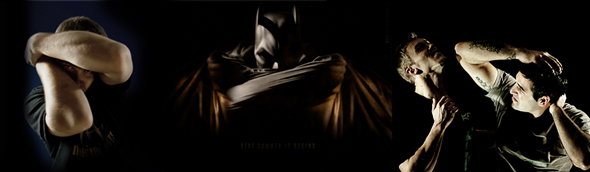
Batman’s Fighting Method

I have to say my all time favorite comic book superhero is Batman. With the movie releases of Batman Begins and the Dark Knight, I think these are the best Batman movies made. Now with Keysi Fighting Method (KFM), Batman’s display of fighting is better then ever.

Anyone with martial arts experience can tell that all of the Batman movies in the past consisted of simple martial arts choreography. The fight scenes in the past was reminiscent of the comic book “BAM”, “BOOM”, and my favorite “POW” style of fighting.

When the director/co-writer Christopher Nolan began working on the movie Batman Begins, Nolan didn’t have any idea KFM would be the fighting method of choice. Nolan did how ever wanted the violence on-screen to not lose its threat. Buster Reeves is a jujitsu world champion and was Christian Bale’s (Batman) stunt double for the movie. Reeves suggested KFM to be used in the movie. The fight arranger David Forman and the rest of the movie crew accepted KFM right away after a demonstration from the founders Justo Diéguez Serrano and Andy Norman.

KFM is a method of self-defense that is based on natural fighting instincts, martial arts and street fighting techniques, developed by Justo Diéguez Serrano from his fighting experiences while raised on the streets of Spain. The system was founded with the help of Andy Norman. Both Serrano and Norman are also instructors of Jeet Kune Do.

KFM is most recognized for the use of a tight defensive postures to protect the most precious part of the body, the head, and smashes and opens up the opponent for the finish using all ranges of strikes — punches, hammer fists, kicks, knees, head butts, and the sharp elbows to the opponent.

KFM is a close quarters fighting system, relying on understanding how people typically move or attack in a fight so that when striking, the opponent’s body moves to expose further targets. Another interesting aspect of KFM is its “360-degree” approach to multi-assailant attacks whether standing, kneeling, sitting or lying down!

I am so excited for the next Batman movie in the series, which is scheduled for release later in the year.

Black Belt Magazine’s Wing Chun Grandmaster William Cheung’s Technique Post (Combative Breakdown)

Wing Chun Kung Fu Grandmaster William Cheung Shows You How to Deal with Low Kicks From a Muay Thai Fighter!

A post from Black Belt Magazine. http://email.blackbeltmag.com/t?r=11&c=5974&l=11&ctl=466B8:BD1B6880428B636E3E06B980D4348693&%20martial-arts-dvd-preview-for-william-cheungs-street-fighting-applications-of-wing-chun-volume-3-muay-thai-melee

David Chan here after years of training and continually devoted in the studies of the combative arts, is here to breakdown an online post about martial arts.

This video shows Grandmaster William Cheung shin check an opponent’s rear low roundhouse kick. Grandmaster Cheung uses the checked leg to perform a huan guer (circle leg footwork) to move to the outside of the opponent. Then Grandmaster Cheung executes a series of gum sau (pressing hand) to the opponent’s lead hand and punches to the head.

First I understand that this video is only a small slice from Grandmaster Cheung’s new instructional DVD.

Lets address some of the most common comments.

The basic Muay Thai kicking technique is taught to finish the kick by returning the kicking leg back to the original fighting position, in the video the attacker does not do this. I can see several reasons why this is not performed. One is when the leg is checked the gum sau is performed almost simultaneously right after the shin check, the opponent does not have the opportunity to retract the kicking leg without being unbalanced falling forward. This would also mean that due to variables in hand/arm positions, the gum sau may need to become a grab and pull. Another possible outcome is when the kick is shin checked strong, the shin check created so much damage that the opponent neglected to return the leg, but this is not always the outcome.

What happens if the opponent does return the kicking leg back to the original fighting position?

This would mean Grandmaster Cheung would end up in the inside of the opponent. Though this is not the most favored situation to be in, Grandmaster Cheung can be in position to now face the opponent squared off with the opponent’s legs and feet in a neutral position, which means the opponent has to reposition to be more defensive or offensive.

What I would like to see.

I would like to see more. It would be interesting if Grandmaster Cheung addresses any of the common questions in the DVD. I think Grandmaster Cheung needs to show other variables that can happen, especially if you are talking about street fighting.

Thank you Black Belt Magazine for the post.